“Behind intimidating messages are merely people appealing to us to meet their needs”
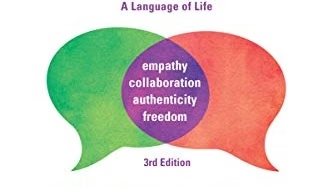
Nonviolent Communication (also known as NVC) is one of those books that puts together so many important little nuances and patterns in such a succinct way. Being able to have a framework along with tools to be able to show up with empathy is something I’ve found extremely useful in my life. Sometimes it can be hard in such a fast-paced day to just say whatever comes to our mind or listen to others without the intent of truly understanding. I think a reminder that putting in the effort to show up for others compassionately makes all our lives more fulfilling.
Observations, Feelings, Needs and Requests
Being able to structure how we communicate to include these 4 aspects can be powerful once we understand why we should do so. Rosenberg goes through many situations in our life that may provide conflict, from asking someone to pick up their dirty socks to dealing with racial prejudice in underrepresented communities. It was really powerful to think that when we are not understanding these aspects about ourselves and the people we speak to, we open up the door to hurt and betrayal. It can be easy to see aggresive comments and criticism on oneself, but in a lot of cases taking the time to communicate with someone with empathy can show the hidden need to be understood that most of us are yearning for.
A theme that I thought was compelling was Analysis of others being expressions of our own needs and values. When we respond in a way that isn’t consistent with our own desires it can wear down on us. This is why people-pleasing can be such a dangerous way to respond to others, you eventually wear yourself out if you are not being authentic. When others are not acting out of goodwill or how they may like, interactions can become transactional and artificial. Not saying we should never do anything for others or vice-versa, but when we take the time to understand the actions of others from their values and morals we can understand why people may act in ways we don’t expect.
“Analyses of others are actually expressions of our own needs and values”
“Feelings with needs” Framework
“Connect your feeling with your need: “I feel … because I need …""
If I had to choose one take from this book to remember it would be this framework. When we connect our needs with the feelings behind them we force ourselves to understand the reasoning behind our communication. We may sound naggy or demanding when we are asking people to do things for us, and that can be intimidating when you don’t how to ask for something you need. When we structure our request with the feelings behind them we can make ourselves process why we are asking for something. It sounds easy to say you know why you are asking for things, but sometimes that is harder than it sounds. Just from my experience these needs when expressed without the intent behind them can create a lot of disconnection between two people.
I need space
You start panicking when someone may need space if you think it’s your fault, but what if it was communicated that the space is needed because the person feels overwhelmed?
Can you run this errand for me?
What if you had a really rough day and are at your limit? Letting someone know that a small task could really improve your day is a great way of building trust and bonds.
I can’t do this activity with you today
There are days where everyone feels a bit anxious or just too tired to do something. Being able to communicate how you feel before that can help others not feel rejected or not good enough.
This framework can be used to listen to others meaningfully too. When someone communicates a need to us without their feelings it can be easy to misinterpret their intentions or their reasonings. When we can hear what they are saying and ask questions like “How are you feeling about this?” or “So you are asking for this because it would help you feel like this?” we extend a hand for others to feel more understood and seen by us. Sometimes they may not even know why they are asking for something! As someone who is more accustomed to viewing things from a logical and “What steps are there for me to take?” perspective, these are sort of like instructions to something that can be hard to navigate at times. I’ve noticed that incorporating these definable questions into my life has changed the way I approach listening.
“We “say a lot” by listening for other people’s feelings and needss”
Appreciation for others
How do we truly give appreciation to celebrate rather than to manipulate? When we are grateful for what others have done are we celebrating their contributions to our lives or are we doing so to ask for more? Rosenberg breaks appreciation into three components:
1 - mentioning which actions contributed to our well-being
2 - which needs of ours were fulfilled by these actions
3 - the positive feelings we have from those needs being fulfilled
Of course if we always were to list off these components when we feel appreciation we are probably going to come off as robotic or crazy. I think that giving more depth to our gratitude can connect people to understand us better and how thankful we are to them. Reflecting over this yourself can be helpful to understand what to ask for and I’ve found that it has improved my gratefulness for even the smallest things people do for me.
Final Thoughts
Like most books on communication most of this book could be summarized to “have empathy, communicate clearly and listen more”. I think that simplification can be misleading though, as a lot of us can always improve on our communication. The components and questions that NVC tells us to keep in mind are like exercises that train mindfulness when we speak and listen. It’s like asking someone to get stronger, but not giving them a set of workouts to get to that point. The book is a really easy and quick read and I am going to look over my kindle notes on this book every once in a while as a refresher.
